This table is a suitability summary, not a live price quote. Each row's official documents are linked in the provider sections. Eligibility can depend on an individual application and product permissions. “Real-asset scope” describes a published category, not a promise that every ticker is available.
What each account suits
Interactive Brokers: broad market and order access
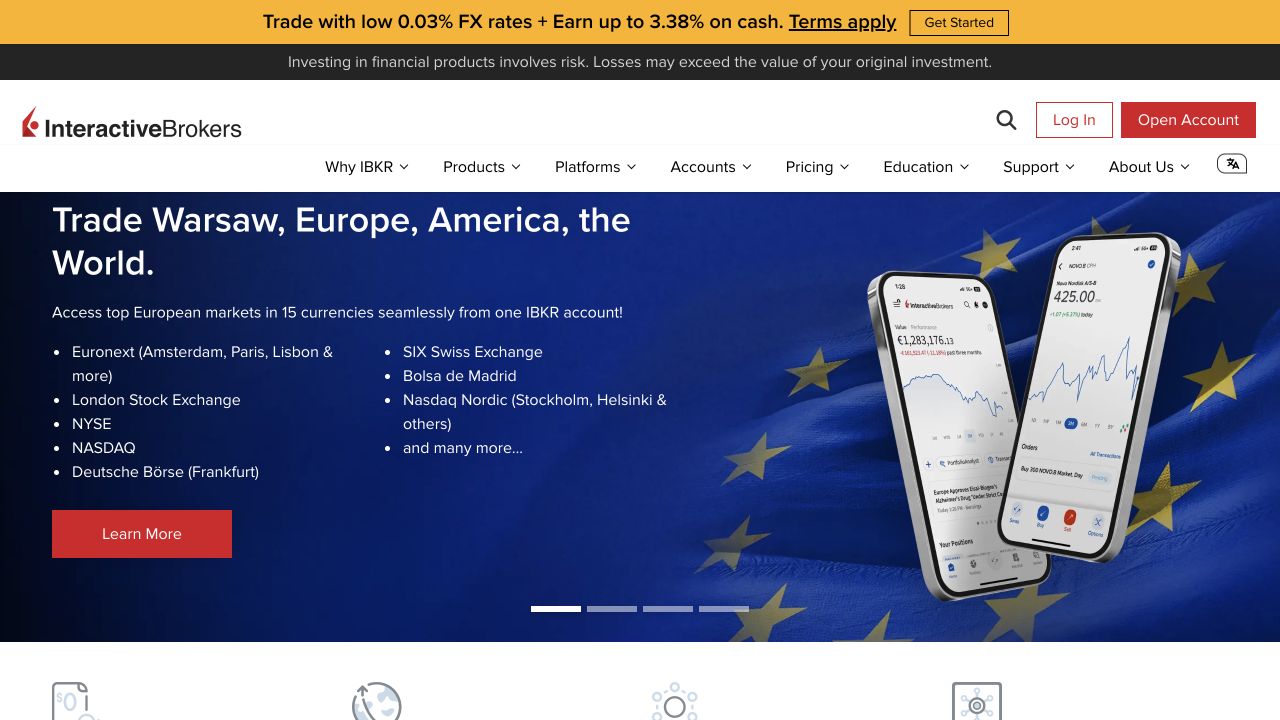
Interactive Brokers is a strong candidate when an investor needs multiple exchanges, currencies and more order controls in one account. Its available-country list includes the Netherlands, and the Ireland-facing stock page describes global share access and several platform choices. The official commission schedule makes clear that exchange and fixed-versus-tiered details matter. This breadth is less useful if the investor wants only one simple monthly fund purchase. Check the entity shown in the actual account agreement and the market data and FX charges for the intended workflow. Our Interactive Brokers review will examine those choices as one account.
Saxo: one Dutch-facing account across product types
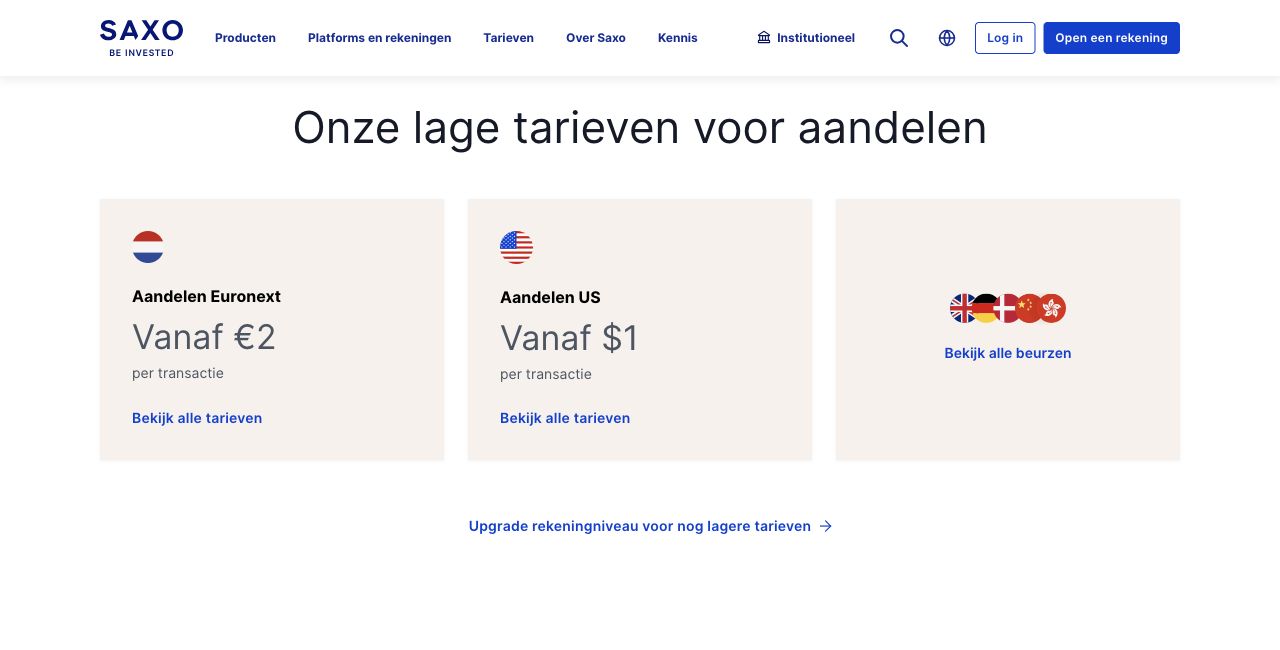
Saxo's Dutch shares page offers Euronext and US shares, and its Dutch tariff page explains Bronze, Silver and Gold account levels. Saxo Nederland operates as a Dutch branch of Saxo Bank A/S, as stated on that page. It can suit a person who wants several markets and product types with a Dutch-facing service. The limiting condition is that the order commission is not the whole annual cost: the published service fee and its transaction-cost-credit mechanism must be included, along with FX. A low minimum rate on a promotional card does not tell a small investor what a year of holding and occasional trades costs. See the Saxo review for the account detail.
DEGIRO: exchange-focused investing with venue conditions
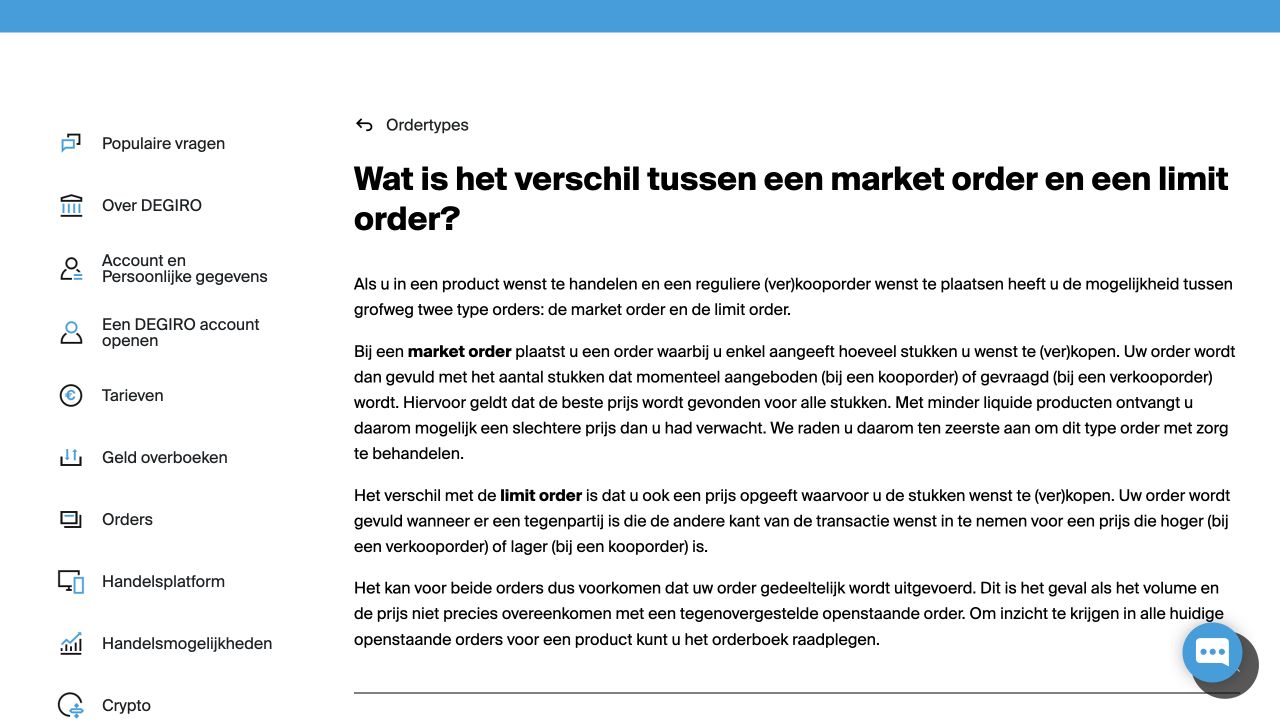
DEGIRO's Dutch stock page and ETF page show why it is relevant to a local investor choosing individual securities. The firm says flatexDEGIRO Bank Dutch Branch trades under the DEGIRO name. It may suit an investor who selects exchanges and order types deliberately. The limiting condition is the detail of the current tariff and ETF programme: the ETF page ties its Kernselectie to Tradegate and mentions handling, currency and external product or spread costs. Those conditions are not interchangeable with an arbitrary Euronext ETF order. Check the exact ISIN and venue before comparing. The DEGIRO review covers the account and reporting.
Trading 212: Invest account for small orders
Trading 212's country list places Netherlands residents under Trading 212 EU GmbH, and its Dutch page presents shares and ETFs on Euronext Amsterdam among other markets. Its Invest fee explanation separates provider commission from FX and exchange or tax charges. That structure may suit small, regular purchases where a fixed ticket minimum would matter. The critical limitation is that “Trading 212” also names a CFD product: an Invest order must be compared with Invest orders elsewhere, and the exact exchange and instrument still need checking. Do not treat its UK ISA or SIPP wording as an account available to a Dutch resident. See the Trading 212 review.
Lightyear: simple ETF and multi-currency workflow
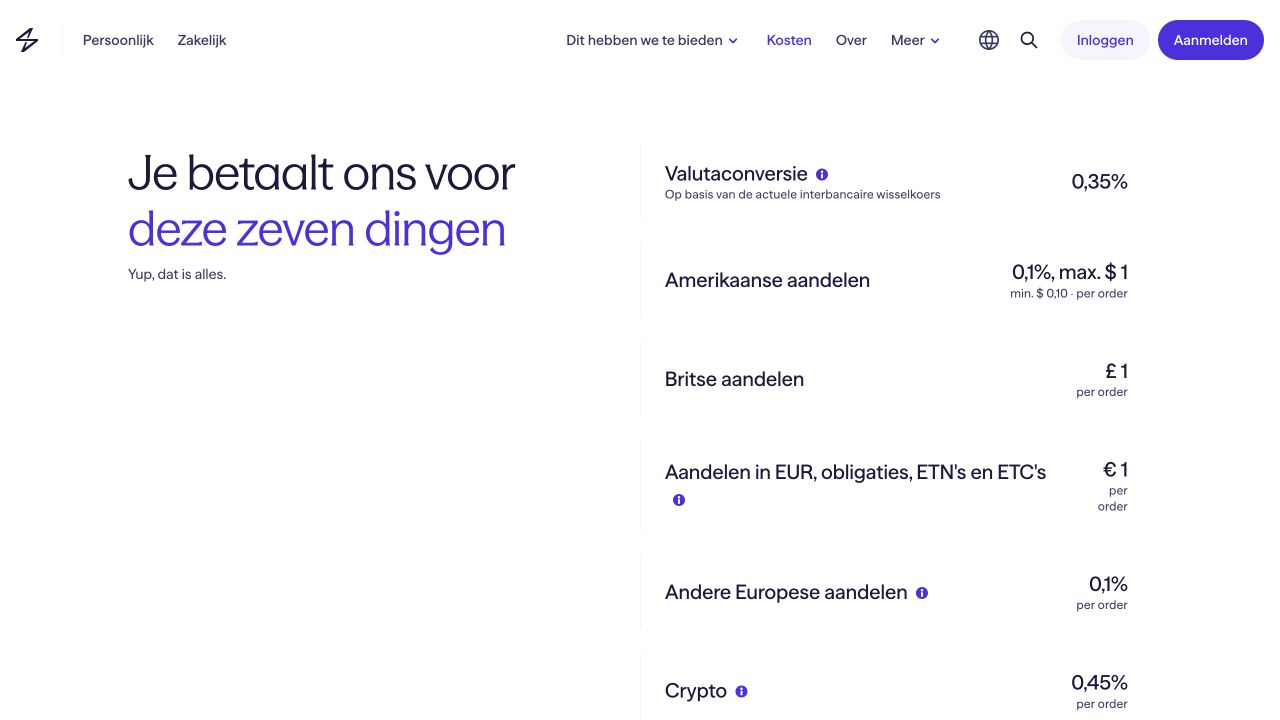
Lightyear explicitly lists the Netherlands in its service area and identifies Lightyear Europe AS as the EU investment firm. Its Dutch fee schedule separates share dealing, FX conversion and ETF execution. A reader buying supported ETFs or holding several currencies may prefer that plain workflow. The trade-off is product and venue coverage: a low cost for a supported fund is irrelevant if the desired listing is not offered. Its ETF help page also says US-domiciled ETFs are not in its offering. Our Lightyear review examines the supported product scope.
BUX: app-led Dutch shares and plans
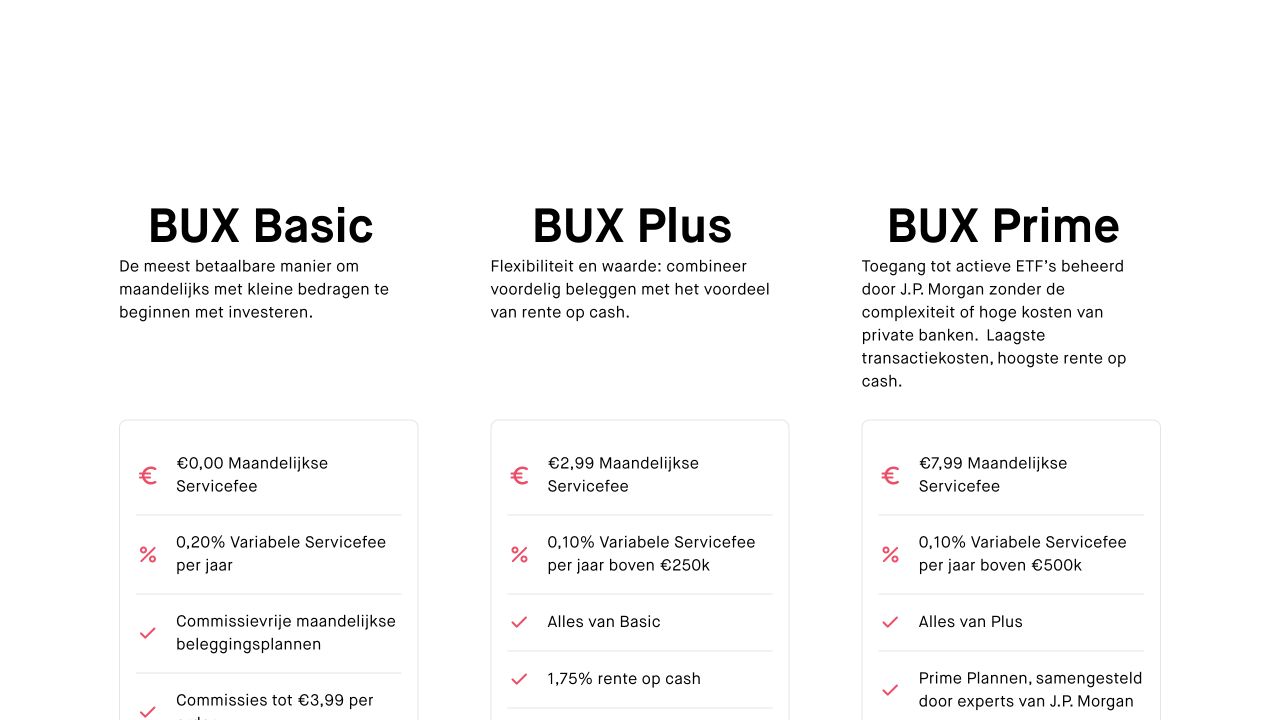
BUX is a local candidate: its legal page identifies BUX B.V. as the investment firm serving share and ETF clients, and its Dutch site presents those products. It can suit someone whose routine is a small number of app-based purchases or investment-plan orders. The Dutch pricing page distinguishes Basic, Plus and Prime, order types and FX markup. That is the important limitation: a price shown for one tier or plan is not the price for every customer. Work out whether the monthly tier cost is justified by the expected order pattern, and whether the order type you need is available. BUX is not a substitute for a platform with every international market or advanced order tool.
The current Dutch pricing page also lists a 0.20% annual variable service fee on Basic, a €2.99 monthly service fee on Plus and a €7.99 monthly service fee on Prime, with additional tier conditions. Those service charges need to be included when modelling an annual holding and order pattern.
Trade Republic: one-off orders and recurring plans
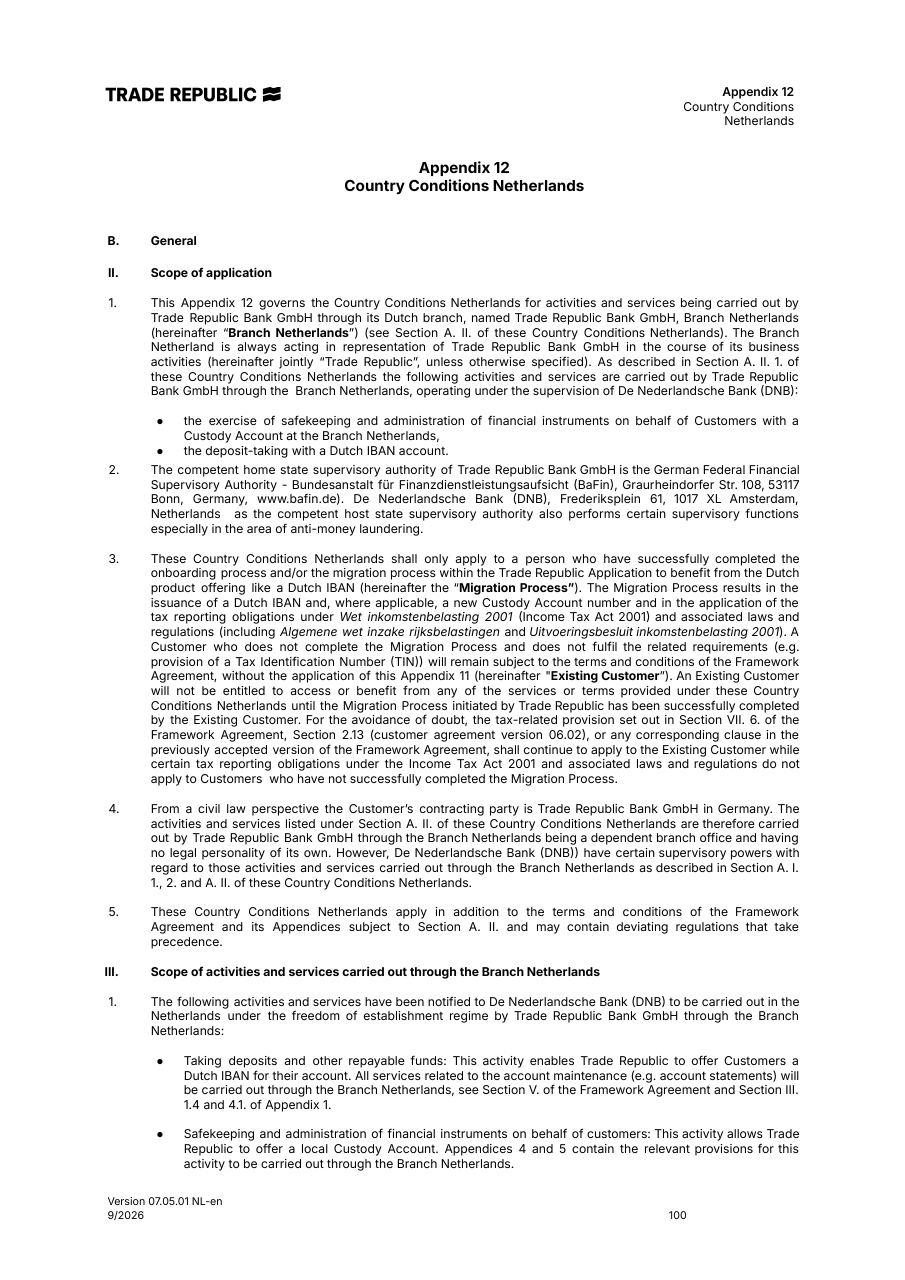
The Trade Republic supported-country help includes the Netherlands. Its Dutch price page distinguishes recurring-plan execution from a one-off order and notes spreads and external costs. Dutch country conditions identify Trade Republic Bank GmbH and the branch role. The account may suit a person setting a regular purchase schedule. For a one-off share purchase, however, the fixed settlement item and execution price need to be considered together. The order ticket is a more useful comparison than the word “commission-free.” Check the available venue and instrument before choosing it for a specific Euronext share.
Scalable Capital: plans and a tiered broker model
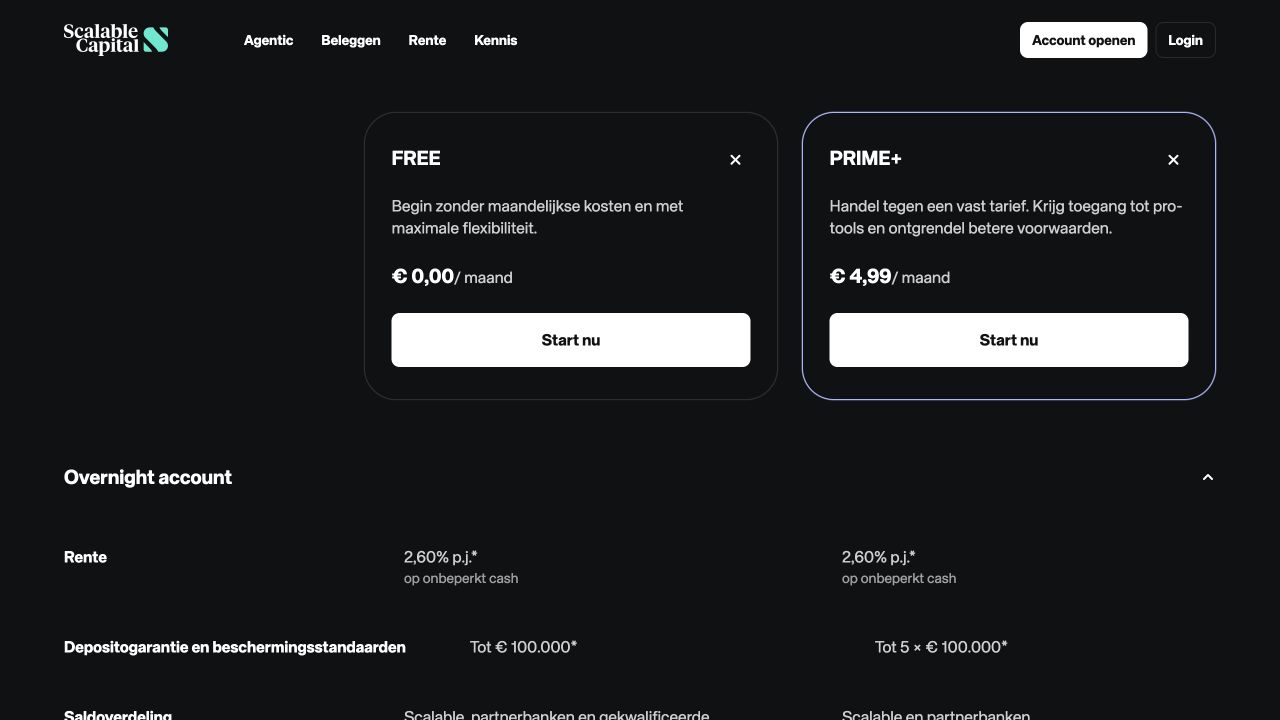
Scalable offers a Netherlands-facing brokerage service for shares and ETFs. Its current entity explanation names Scalable Capital Bank GmbH. The Dutch price page separates FREE and PRIME+ and gives different treatment to eligible ETF purchases, plans, order sizes and execution venues. This can suit a reader building a recurring ETF routine or using the supported European venues. The limitation is that the low advertised ETF-plan execution price does not describe a manual share order, the fund's own expense or every venue. Test the intended ISIN and order size against the applicable model before projecting a year's cost.
Revolut: investing alongside an existing finance app
The Revolut investment terms for Dutch residents name Revolut Securities Europe UAB and list the financial instruments the service may provide. Its Dutch fee help ties order charges to the customer's plan and mentions currency conversion. An existing Revolut user may find the integrated app convenient for occasional supported purchases. The limitation is that a banking-plan allowance is not a general broker tariff: subscription costs, trade count, venue selection and investment-account transfer conditions must be considered. Check whether the desired share or ETF is actually offered and whether a different broker provides better records or order control for the same use case.
eToro: product identification comes first
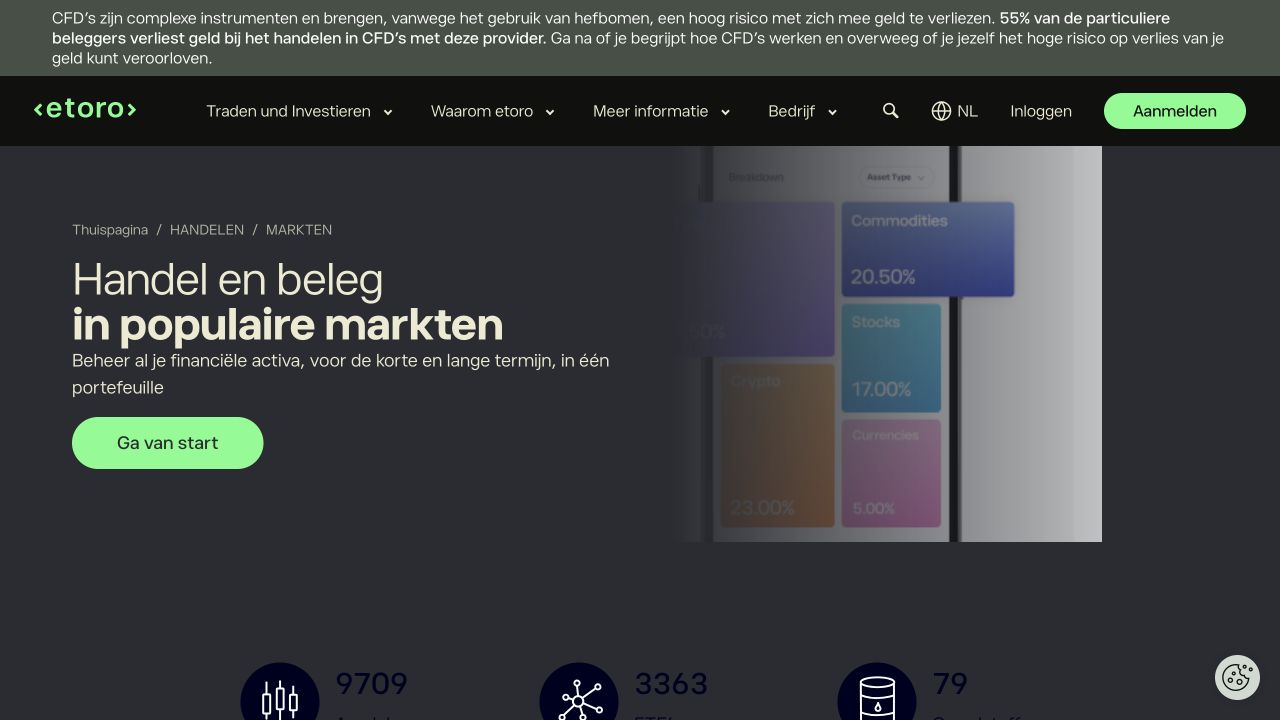
eToro's Dutch market page presents both investing in underlying securities and CFD trading. Its regulator page identifies eToro (Europe) Ltd for European services. The Dutch fee page makes country, exchange, currency-account and product distinctions. It says some ETF buy positions can be CFDs under legal requirements and are marked as such before execution. This account may interest a reader who wants its social or copy functions and is willing to inspect every ticket. It is less straightforward for an investor who wants only direct, portable holdings with simple tariff comparisons. Our eToro review separates underlying investments from derivative exposure.
Two order scenarios
Take a €1,000 order for an Amsterdam-listed share paid from a euro account. The components to compare are the broker's order commission, any handling or venue charge, the bid–ask spread and any service or account tier fee attributable to the year. There should be no FX conversion if the trade and account settlement are both genuinely in euros, but the instrument and account terms must confirm this. Saxo's Bronze/Silver/Gold schedule and service fee cannot be replaced with the “from €2” figure on its shares landing page. Scalable's FREE/PRIME+ schedule depends on venue and order size. BUX's Basic/Plus/Prime pricing page distinguishes market and plan orders. This is why the same nominal share order must be priced on the exact market, tier and order type.
Now take a €1,000 equivalent purchase of a US share while the investor starts with euros. The relevant equation is euro funding converted at the applicable FX rate + broker conversion markup + US share commission + venue/regulatory charges + spread + any account or service cost. A broker can make the share commission small while earning a conversion markup. Another may allow the investor to hold dollars and pay for conversion separately. Lightyear publishes separate share and FX components. Trading 212 separates its FX fee from trading commission. Revolut uses plan-specific terms. We do not print a single cross-broker euro total because the live currency rate, exact security, account tier, venue and some external charges are not uniform. The actionable comparison is a filled order preview for the same ISIN, amount and funding path at each candidate.
An ETF scenario adds a separate fund expense and possibly a plan-specific price. A broker's zero execution charge does not make an ETF free to hold. Conversely, a fixed transaction charge may be less important for a large infrequent purchase than for a small monthly purchase. The AFM's cost explanation is a useful checklist for separating broker service costs from product costs.
How to verify the account before choosing
First write down what you plan to own: a named Euronext share, a UCITS ETF, a US share, or a derivative. Record the ISIN and intended venue where possible. Next identify the company in the account agreement, and use the AFM register to understand the firm and its passport or licence status. Our broker-safety guide explains the distinction between custody, deposit protection and investor compensation. A brand's legal status does not by itself tell you which product or protection applies to a particular balance.
Then open the broker's current tariff and model your own year: number and size of Dutch and foreign orders, currency conversions, ETF plan purchases, transfers, market data and account fees. Use the same assumptions for every provider. Finally inspect the actual instrument search, account documentation and order preview. If the asset is unavailable or the ticket says CFD when you intended a share, stop that comparison and return to the product choice. This procedure is more reliable than adopting someone else's ranking or a promotional “from” fee.
Frequently asked questions
Which account should a beginner open first?
Start with the product you intend to buy and the order controls you need. A clear, supported real-share or UCITS ETF route may matter more than a long list of advanced markets. Our beginner comparison applies that narrower test. It does not assume the broadest broker is the easiest.
Is an Euronext Amsterdam share available at every broker in the table?
No. A provider's general stock category does not guarantee a specific listing or venue. Search the ISIN in the intended account and inspect the order preview. Some services route to alternative European venues or offer only a selection of Dutch names.
Does a zero-commission order have zero cost?
No. The spread, FX conversion, product expenses, external charges and account tier may still matter. Compare a complete order and holding scenario, not just the commission label.
Is a broker regulated by the AFM if its site works in the Netherlands?
Not necessarily. A European firm can serve Dutch clients under a passport from its home regulator. Check the exact contractual entity and register entry rather than inferring licence status from the language of the website.


 Interactive Brokers
 Saxo
 Trading 212
 Lightyear
 eToro