StoneX Europe and IC Markets (EU) appear in the AFM register with incoming EEA passports. That is entity evidence, not a performance score. The other entries rely on the relevant Dutch service, EU onboarding and group legal disclosures linked in the individual notes. If your application presents another contracting entity, repeat the check before using these comparisons.
Where each route fits
Saxo: rolling spot with a Dutch pair schedule
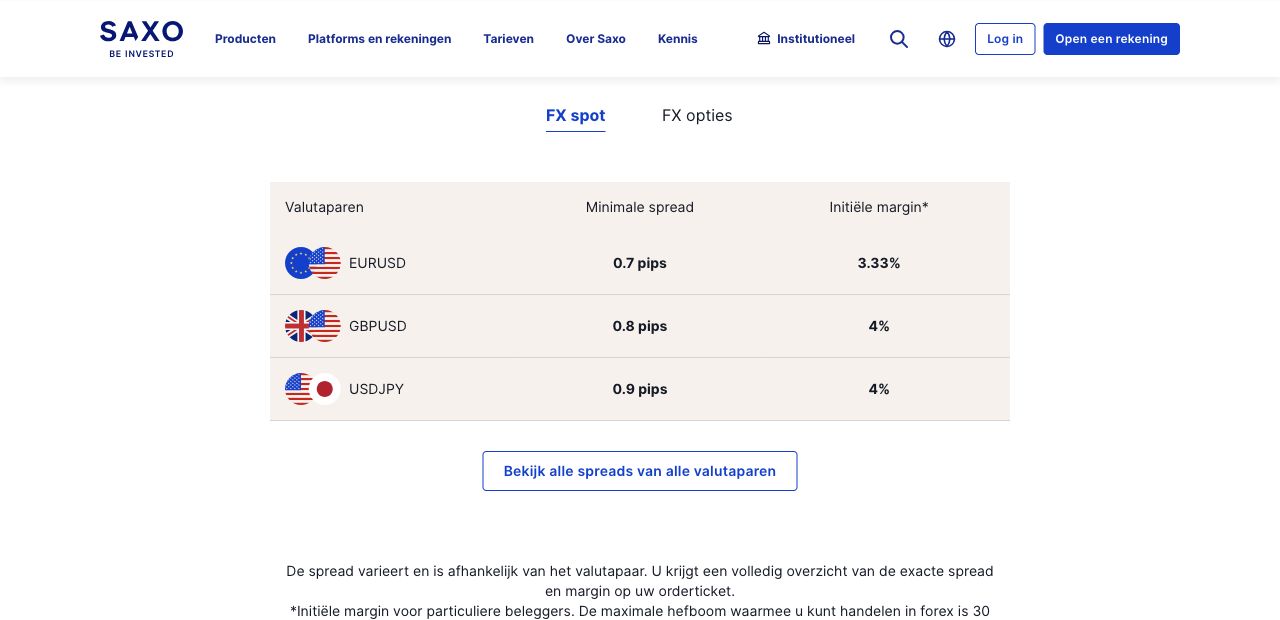
Saxo's Dutch forex page lists FX spot pairs, a minimum spread and initial margin in one place. That is helpful for narrowing a pair list. Its pricing explanation adds the missing holding-cost question: positions are rolled with tom/next and a financing adjustment. Saxo fits someone who wants to distinguish an intraday trade from a carried position and is willing to inspect the ticket. It is less suitable if the user assumes “spot” means that an open speculative position delivers dollars into a cash wallet, or if a minimum spread is treated as a guaranteed fill. See the Saxo review for the broader account.
IG: pair terms separated from other leveraged products
IG's Dutch forex-CFD conditions specify contract sizes and distinguish minimum and period-average spreads. Its tariff page has several sections covering forex CFDs and other products, including options. A rate in one section must not be assigned to another. The forex overnight explanation uses tom/next plus an administration component. IG fits a trader willing to read the specific forex-CFD line and compare the ticket against the published spread measure. It fits less well if the user wants currency delivery or needs one fixed overnight charge before the direction and date of the trade are known.
The European terms page names StoneX Europe Ltd, explicitly includes Netherlands among passported states, and says the service is intended for those states. The European product page presents forex within its CFD markets, with web, mobile and MetaTrader 5 routes. Its EUR/USD instrument page provides a minimum dealing size and pair-specific margin information, while live spread and rollover still need the order information. FOREX.com fits a resident seeking a dedicated currency-platform workflow. It is less suitable for a reader who wants physical EUR-to-USD conversion or assumes that one published spread applies to every account type and market hour.
OANDA: currency-focused CFD execution
OANDA's Dutch forex page offers currency pairs through its EU service, and the EU terms describe currency-CFD financing. The relevant provider is OANDA TMS Brokers S.A., as identified on its Dutch service. This fits a trader who wants a currency-first interface and can inspect both side of the EUR/USD quote and its financing entry. It is a poor fit when the purpose is simply to pay a dollar-denominated bill or buy a US share with settled dollars. We did not infer a current EUR/USD rate from another OANDA regional website. Our OANDA review treats the broader service.
IC Markets: choose the account model before comparing spreads
The IC Markets (EU) FAQ identifies Forex CFDs and two account models. Standard adds a markup to the spread without a separate trading commission. Raw Spread exposes a narrower provider spread and adds a round-turn commission. The same FAQ describes EUR, USD and GBP base currencies and MetaTrader choices. A headline raw spread without its commission is an incomplete price. This route fits a trader who knows which account and terminal they would use and can inspect both spread and swap. It fits less well for someone wanting a simple single-line price or settled currency. The AFM register entry supports the incoming Dutch service route, while the application determines the final account.
Interactive Brokers: distinguish exchange from a margin position
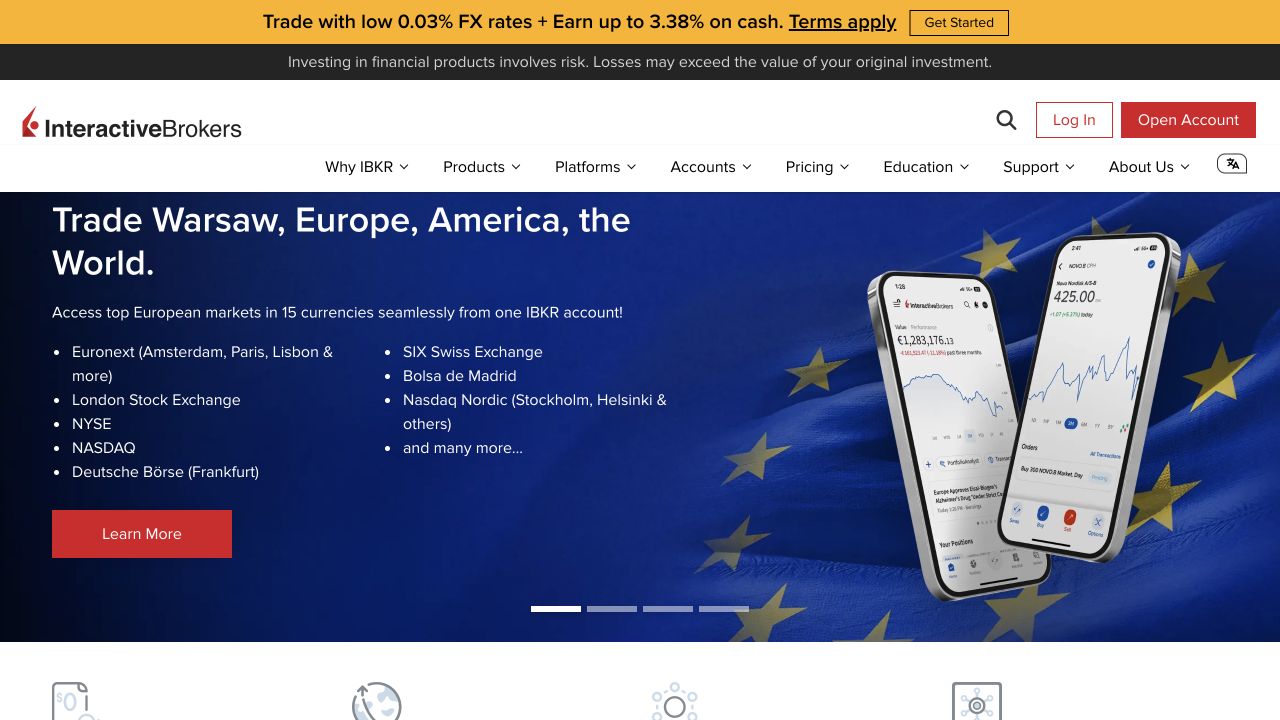
Interactive Brokers Ireland's currency-trading page describes direct spot exchange, and its spot-currency tariff has commission and minimum-charge rules. The published order-size table gives EUR 20,000 as the direct spot minimum. That alone makes the 10,000-unit example below unsuitable for this particular spot order route. IBKR is included because a Dutch resident can use currency trading for a different purpose and size: its Ireland application country list includes Netherlands. Do not treat an automated cash conversion for securities settlement, a direct spot FX order and a leveraged margin position as identical trades. Our Interactive Brokers review examines the whole account.
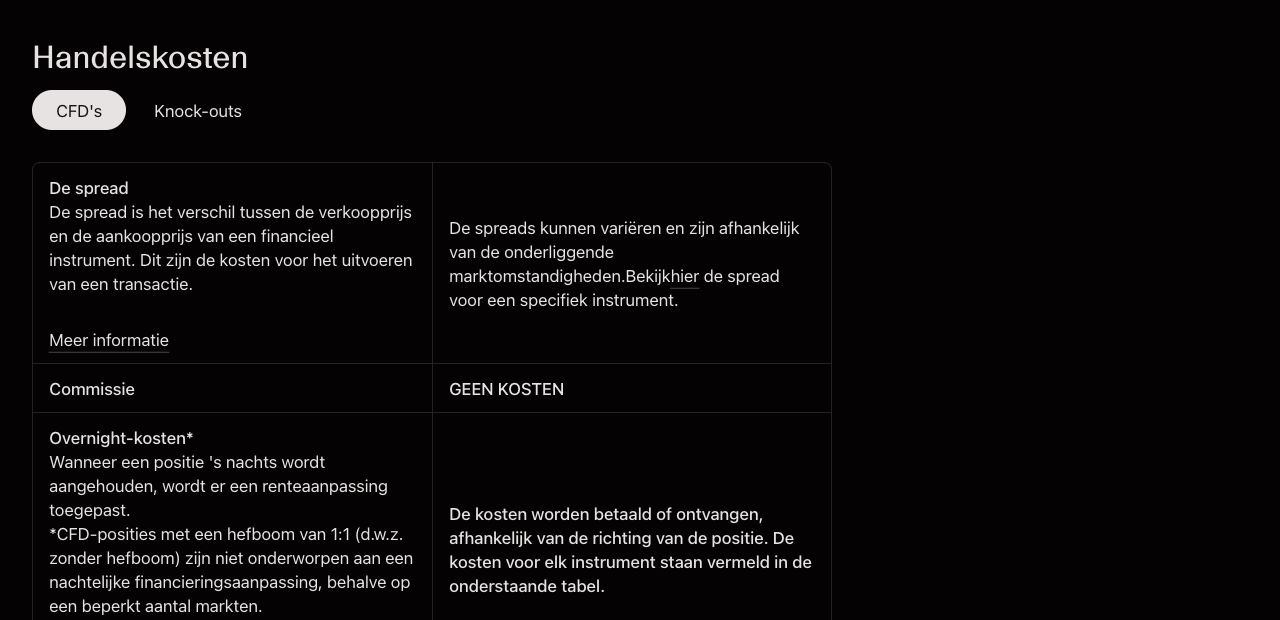
Capital.com's Dutch CFD page identifies Capital Com SV Investments Ltd and explains the derivative product. The Dutch pricing page separates spread from overnight financing, while the Dutch FX key information document establishes the currency-CFD category. This fits a person who wants forex alongside other CFD markets in one order workflow. It is less attractive if the decision depends on a fixed EUR/USD spread or carry charge before viewing the live pair and direction. Do not substitute a share-CFD or index-CFD charge. See our Capital.com review.
XTB: check the Cyprus route a new EU applicant receives
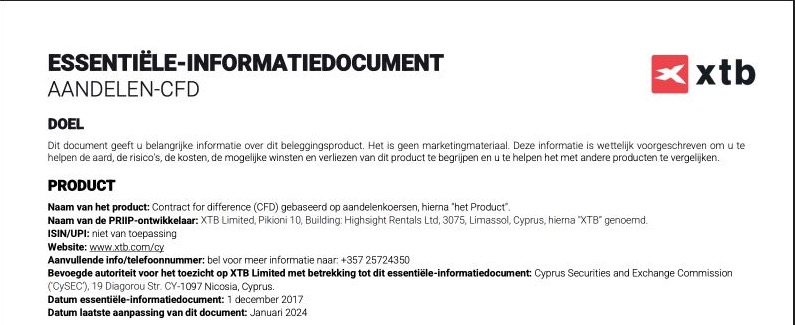
XTB's onboarding help routes EU residents to XTB Limited in Cyprus. Its Cyprus site advertises forex among leveraged CFD instruments and xStation access. The Cyprus instrument specification explains that spreads float and directs clients to separate spread and swap tables. It also distinguishes minimum from average spreads. This route fits someone who wants a euro-based account and xStation tools, subject to the Cyprus account's exact symbol. It is less suitable if the reader assumes a tariff from XTB's Polish, German or other group website governs the new Cyprus agreement. Our XTB review covers the entity distinction in more detail.
Plus500: verify the issuer on the Dutch terms page
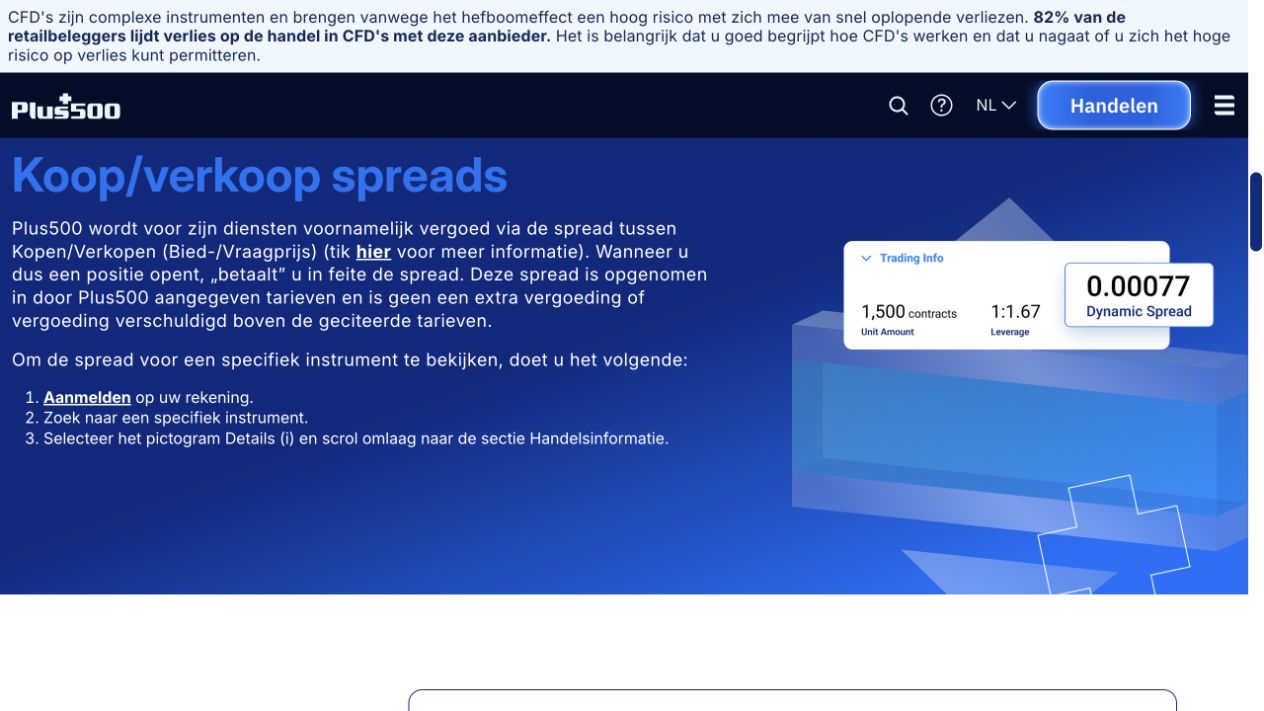
The Plus500 Dutch terms page identifies Plus500EE AS as the relevant product issuer. The Dutch fee explanation separates spread, overnight funding, account-currency conversion and possible inactivity charges. Its forex offer is a CFD route. Opening it does not deliver currency. This can fit a user who prefers a focused CFD interface and can read the ticket's funding line. It is less suitable for comparing with a Cyprus Plus500 tariff copied from a review of another jurisdiction. If the application presents another entity, the displayed agreement takes priority.
eToro: currency positions are CFDs
eToro's Dutch help article is unusually explicit: all forex trading on the platform uses CFDs and does not buy or deliver the currencies themselves. The Dutch regulation page identifies eToro (Europe) Ltd. Its CFD spread page and general fee page should be read together with the pair ticket for any overnight position. It can fit someone who already understands eToro's multi-asset interface and deliberately wants a currency CFD. It is a poor match for currency exchange or for comparing a quoted minimum spread while omitting the holding cost. See the eToro review.
EUR/USD intraday and overnight worksheet
Use a 10,000-euro notional EUR/USD position, a USD quote currency and a USD-denominated cost illustration. One pip for this pair is 0.0001 dollar per euro. At 10,000 euros, one pip therefore equals $1 of quote-currency price difference. This arithmetic is independent of broker branding. If the quoted dealing spread at the moment of opening and closing were 0.7 pip with no change in the mid-price, the spread component would be about $0.70 for a completed round trip. That is an illustration, not a forecast of a fill. Saxo's Dutch table shows 0.7 pip as a minimum for EUR/USD. A wider actual spread, slippage, a separate commission or a different order route changes the result. If the account is in euros, convert any USD-denominated cost using the account's actual conversion treatment rather than silently calling dollars euros.
For an intraday FX CFD, record the actual opening ask, closing bid, any commission and account-currency conversion. For a held FX CFD, add the financing or swap charged or credited at each rollover. For Saxo rolling spot, add its tom/next-based rollover and financing component. Saxo explains that open spot positions are rolled daily. The daily amount depends on pair, direction, position size and the relevant financing terms, and weekends can change the number of days represented by a rollover. An intraday advertised spread cannot establish the cost of holding for a week.
For IBKR's direct settling spot route, the published 20,000-euro minimum means this 10,000-euro direct order is below the stated size. A separate comparison would have to use an eligible larger amount and include the spot commission minimum. Once currencies actually settle into cash, there is no open rolling forex contract to price like the CFD example. If a margin loan arises elsewhere in the account, that has its own terms. Settled FX is not a universal claim of zero financing.
| Transaction | Intraday items | Additional item if held | What cannot be inferred from a headline |
|---|
| Settling cash FX | Quote and spot commission/minimum | Any separate margin borrowing, if used | CFD spread or swap. |
|---|
| Saxo rolling spot | Dealing spread and applicable tier | Tom/next rollover and financing | Actual fill from published minimum. |
|---|
| Currency CFD | Spread and any account commission | Overnight swap or financing, by direction and date | One fixed overnight rate from a general fee page. |
|---|
Execution, margin and account checks
Start with the contract: does the ticket say cash currency, rolling FX spot or CFD? Then record the legal entity on the agreement, the base and quote currencies, the account currency, and the unit size. A standard lot, mini lot and platform “unit” can differ. The IG contract sheet explicitly distinguishes standard and mini contracts. Entering “1” without reading that sheet is not a common-size comparison across platforms.
Next compare the bid and ask at the same moment and account type, then add explicit commission. A published minimum spread is a lower bound, not a representative price. A published average covers a defined period and still cannot predict the next trade. IC Markets' account FAQ demonstrates why Raw and Standard must be assessed with different spread-plus-commission formulas. IG's Dutch tariff page has more than one product table, so first locate the forex-CFD line that matches the intended order. For any limit or stop instruction, inspect the order's execution policy and what happens outside liquid hours. A stop instruction does not promise an exact exit price.
Margin is collateral for exposure rather than the purchase price of euros. The AFM retail CFD measures include product-specific leverage limits, margin close-out and negative-balance protection. These rules affect how a position is maintained and closed. They do not make a spread or financing charge disappear. Check whether a platform's displayed margin applies to a Dutch retail account, a professional account or another entity. The same notional amount can require a different initial deposit when the product classification or account differs.
Finally, inspect what costs survive an idle or closed trading position: deposit/withdrawal method, currency conversion, inactivity and account service. Plus500's Dutch fee page provides an example of why a zero dealing commission is not the same as a cost-free account. For a single quick trade, spread and commission dominate. For a carried position, swap or rollover can dominate. For a rarely used account, account terms matter. Compare the same transaction horizon before choosing a route. The forex guide explains pair mechanics, and the broker-safety guide explains entity and custody checks. A general CFD broker comparison covers other underlyings rather than treating every CFD provider as a dedicated forex venue.
Frequently asked questions
Which of these routes actually exchanges euros for dollars?
Interactive Brokers' direct spot-currency route is the clearly documented settling exchange in this list, subject to its order minimum and account terms. Saxo's described FX spot trading positions roll rather than physically settle while open. The providers identified as currency-CFD routes settle a price difference instead of delivering dollars. A broker may separately convert currency to settle a securities purchase. That service should be assessed on its own tariff rather than inferred from the forex trading screen.
What does an EUR/USD trade cost to open and hold?
The opening and closing prices contain a bid–ask spread. Some account types add a dealing commission. Keeping a rolling spot or CFD position open across the provider's rollover adds a direction- and time-dependent financing adjustment. Account-currency conversion or account charges may also apply. Use the same notional, product, account type and holding period in both quotes. The 10,000-euro worksheet above shows the pip arithmetic but deliberately does not invent a universal live price or swap amount.
Is the lowest displayed EUR/USD spread the cheapest route?
No. A minimum is not a typical spread, and a Raw account can pair a small spread with commission. An overnight position introduces financing. IBKR's direct spot route has a separate order minimum and commission structure. Decide first whether the trade is cash exchange, rolling spot or CFD, then compare the full applicable order and holding cost.
Does an AFM register entry mean the AFM supervises every provider here directly?
No. The StoneX Europe register record, for example, shows an incoming EU passport and says the AFM does not supervise the firm directly. Read the contracting entity and home regulator in the customer agreement, then inspect the Dutch register entry. A register record is an identity and service-route check, not a recommendation or a promise about execution quality.


 Saxo
 OANDA
 Interactive Brokers
 Capital.com
 XTB
 eToro