

A brand review answers a different question from a “Best” page. The review follows one provider through its products, entity and tariff. A broker comparison orders several account routes for a defined task. Use the directory below to read about a provider you have already heard of, then use a comparison if you want to see which route may suit your own activity. None of the names below is a universal recommendation.
Browse reviews by name
| Broker review | Main question for a Dutch resident | Relevant route |
|---|---|---|
| Capital.com | Which Cyprus group company and product account applies to a new applicant, and how do CFD spread, financing and conversion differ? | CFD brokers |
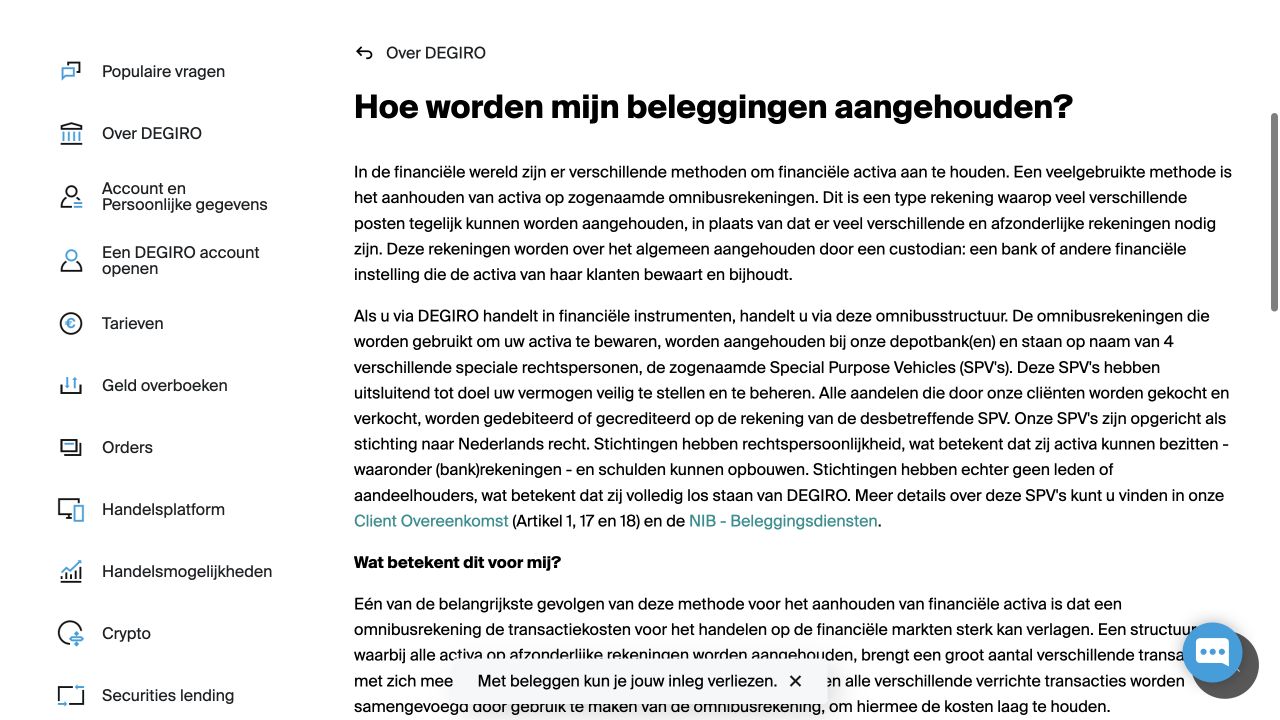
| DEGIRO | What does a Dutch share or ETF order cost after venue, currency and connectivity conditions? | Stock brokers |
| eToro | Is the intended order an underlying security or a CFD, and which account and currency terms apply? | Broker accounts |
| Interactive Brokers | Which Ireland account, market permission, pricing tier and data entitlement fit the intended trade? | Trading platforms |
| Lightyear | How do share/ETF eligibility, recurring plans, conversion and custody work for a Dutch investor? | ETF brokers |
| NinjaTrader | Can a Dutch applicant use the futures route, and what do platform, exchange data and contract fees add? | Trading platforms |
| OANDA | Which European company issues the CFD, and how do currency, index and TradingView workflows differ? | Forex brokers |
| Saxo | Which Dutch account, product permissions, dealing charges and custody/reporting conditions apply? | Stock brokers |
| Swissquote | Does the Luxembourg bank route or another group company serve the account, and which market tariff follows? | Broker accounts |
| Trading 212 | Does the EU GmbH Invest or CFD account govern the order, with which conversion and protection terms? | Trading apps |
| XTB | Which Cyprus products can a new Dutch account actually use, given conflicting public information on real shares? | CFD brokers |
The product distinctions in this directory are grounded in the providers' own pages. For instance, Trading 212 separates Invest and CFD instruments, and XTB's Cyprus legal index lists several product-document families without proving every new account's eligibility. A review therefore identifies what a public source establishes and what still has to be checked in the offered account. A logo or a general list of asset classes is not enough to establish ownership of a share.
What to look for in a review
Start with the legal entity. A familiar brand can have different companies in different jurisdictions. The AFM investment-firm register helps identify Dutch-authorised and incoming European firms, but the customer agreement names the company responsible for a particular account. Next identify the product: a real share, UCITS ETF, currency conversion, forex derivative, listed future and CFD have different ownership and cost mechanics. A provider can offer more than one of them under the same navigation label.
Then compare the full cost of your intended transaction, not a single headline commission. A stock purchase can involve venue and conversion charges. A recurring ETF plan can depend on the selected fund and order method. A CFD may use a spread plus overnight financing, while a futures route can involve exchange, data and platform charges. Our broker-safety guide explains entity and custody checks. The stock-buying guide shows how to identify an underlying share on an order ticket. A review's suitability notes tell you who might prefer another route, not who must use the broker.
If a review seems inconsistent with the account you are offered, email contact@leerzelfbeleggen.com with the page URL and the relevant official document. We will check the claim against the applicable entity and update the article when the evidence warrants it. The editorial policy explains corrections and how commercial relationships are disclosed.