The table distinguishes documented share access from verified access to one named Amsterdam listing. If an entry does not explicitly establish Euronext Amsterdam, do not infer it from the presence of a Dutch stock on another venue. The individual sections explain that boundary. A foreign share introduces a currency transaction for many euro-funded accounts. The buy-and-hold cost is therefore more than the order commission alone.
Where each route fits
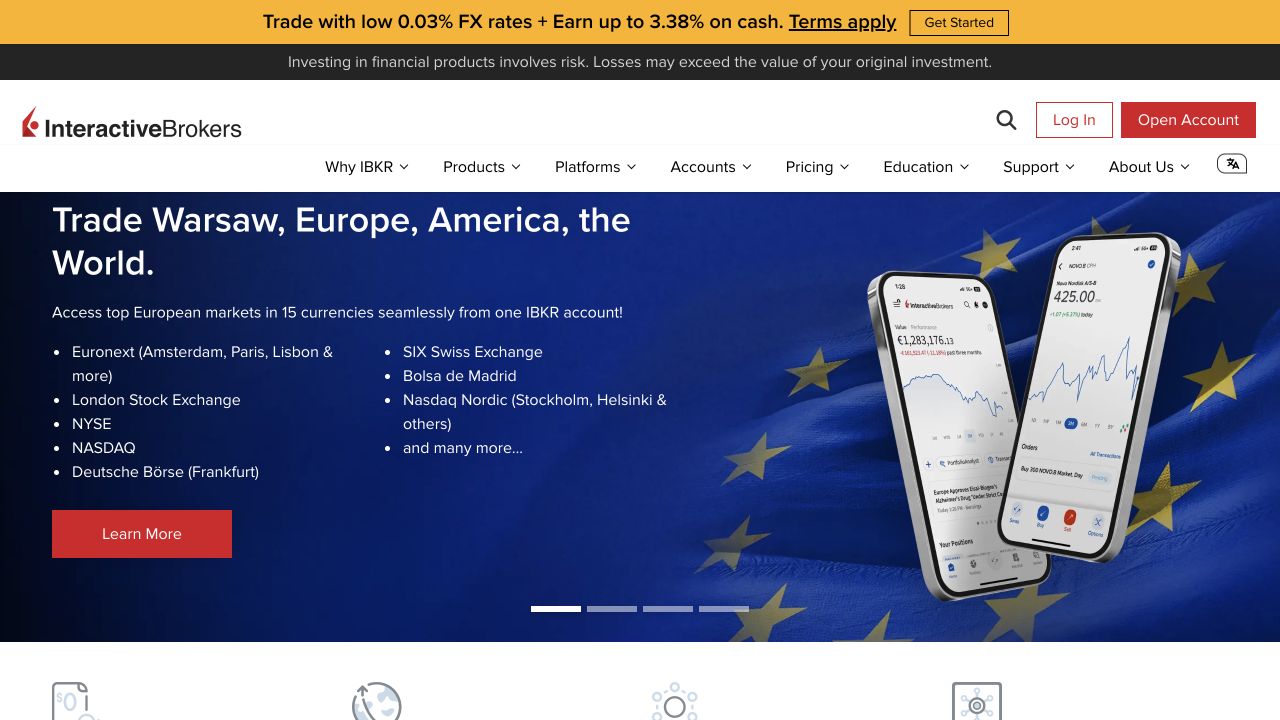
Interactive Brokers: venue breadth for a deliberate investor
Interactive Brokers lists the Netherlands among available countries and its stock product page describes global share trading. The official tariff includes Netherlands exchange examples, but the fixed and tiered models and third-party charges must be read together. This route fits an investor who wants exact market selection, international holdings and multiple order types. The trade-off is the number of choices required before the first order. Check the actual IB Ireland account agreement and the treatment of market data and currency conversion. The Ireland website alone is not a substitute for the executed customer contract. See our Interactive Brokers review.
Saxo: Dutch-facing shares and a wider account
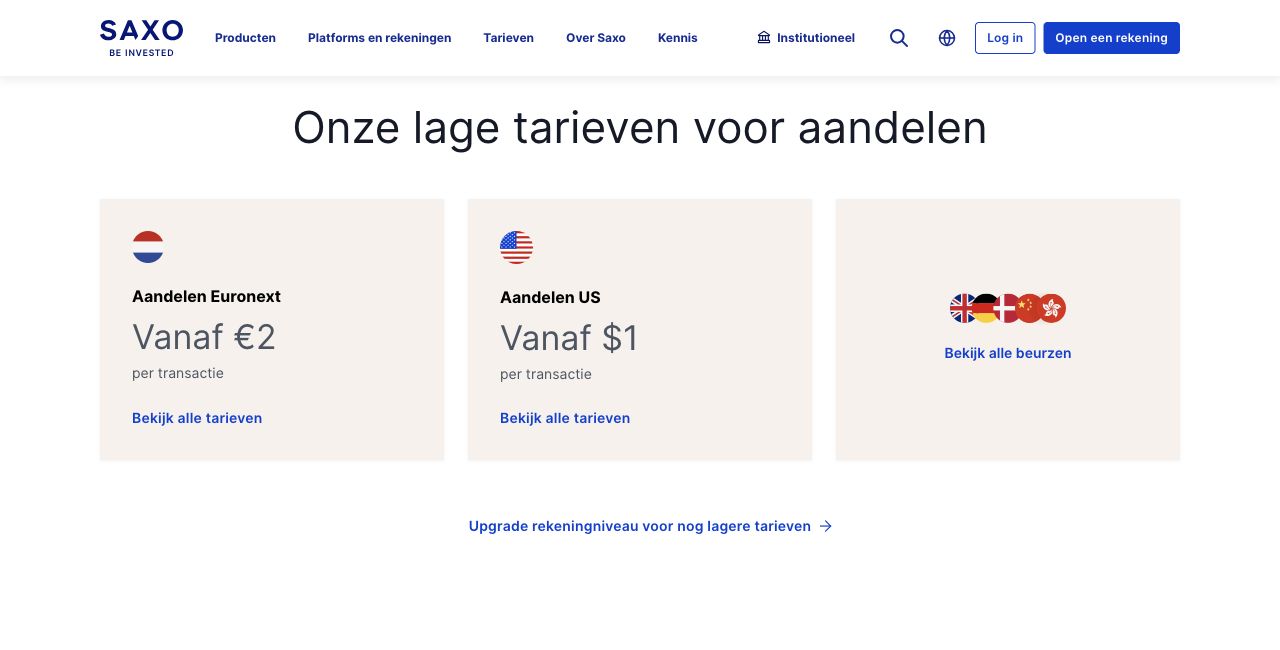
Saxo's Netherlands shares page explicitly presents Euronext and US trading. Its Dutch share schedule distinguishes Bronze, Silver and Gold and explains its service-fee credit. The page identifies Saxo Nederland as a branch of Saxo Bank A/S. This is a useful fit when a holder wants Dutch and international shares under one established account and may use multiple currencies. The limiting condition is that a quoted minimum transaction price omits the ongoing service-fee calculation and potential FX. Saxo's transfer page accepts shares and other securities for an incoming transfer. An outgoing transfer still requires its own current terms. See our Saxo review.
DEGIRO: a concrete Amsterdam and US tariff
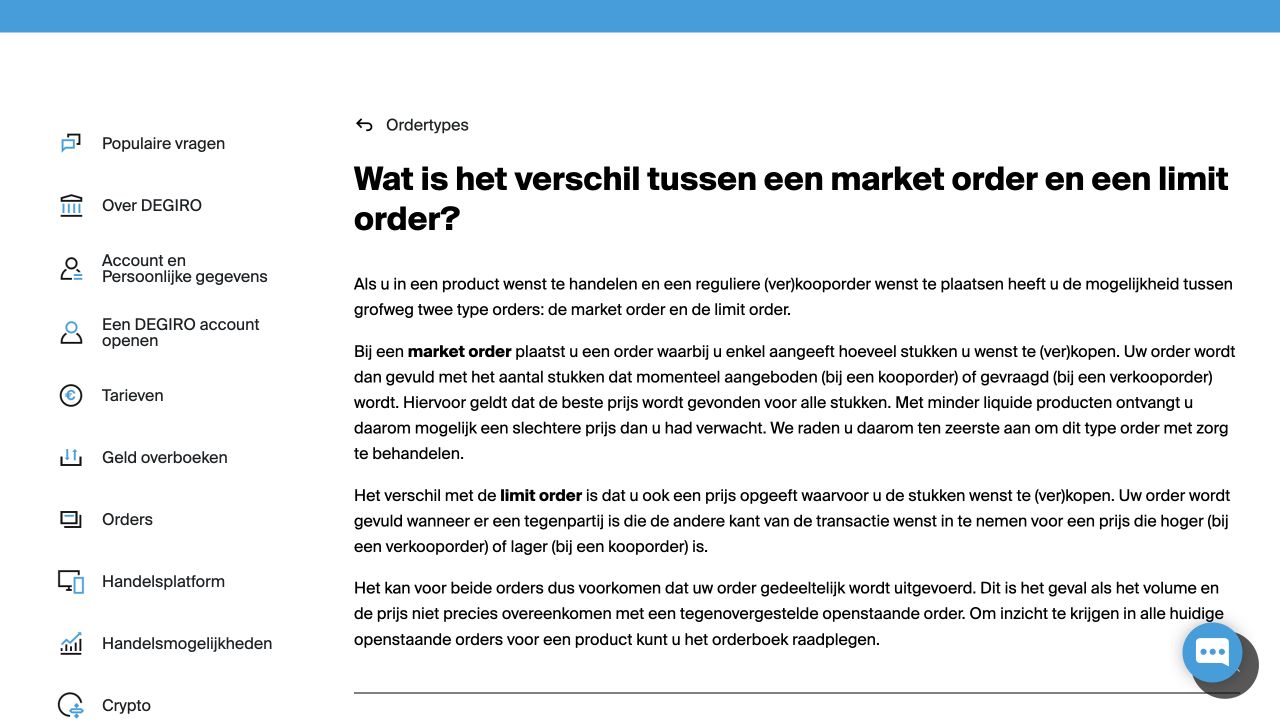
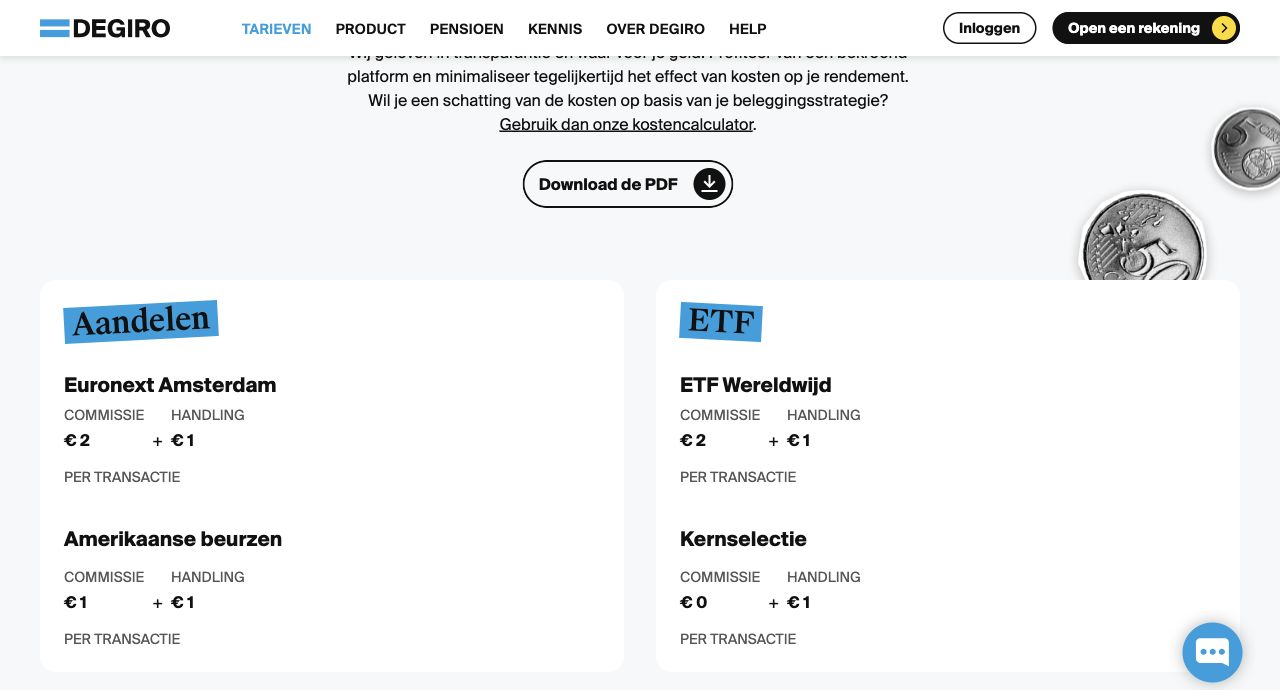
DEGIRO is particularly useful for explaining the Dutch-versus-US comparison because its NL tariff page names Euronext Amsterdam and American exchanges separately and distinguishes commission from handling. The share page describes the real-stock route, while the entity help names flatexDEGIRO Bank Dutch Branch. It fits a shareholder who chooses an exchange deliberately and accepts the account's FX and connectivity rules. A different listing or foreign-currency setting changes the cost. The displayed share commission is not a complete bill. The portfolio-transfer help should be read before assuming an in-kind exit is free. See our DEGIRO review.
Swissquote Bank Europe: securities through the EU service
Swissquote's Luxembourg bank site identifies Swissquote Bank Europe, and its Trading Account page describes real stocks, ETFs and access to international exchanges. The Swissquote Bank Europe rate card names the Luxembourg entity and lists Netherlands among stock markets. This route may suit someone who wants a bank-style multi-product account and can accept the applicable minimum ticket and account charges. The critical limitation is regional: Swissquote Bank Ltd in Switzerland and Swissquote Bank Europe are different entities with different price and protection arrangements. Do not apply a Swiss-country share tariff to a Luxembourg EU application. Confirm the exact Amsterdam or US listing in the EU account. See our Swissquote review.
Trading 212 Invest: fractional and ordinary real shares
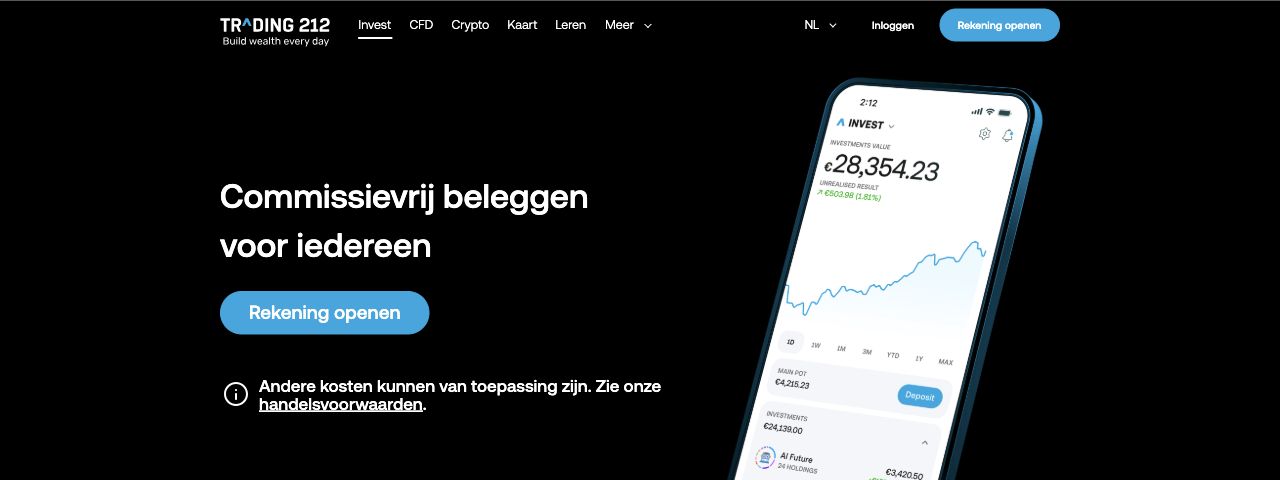
Trading 212 assigns Netherlands applicants to Trading 212 EU GmbH. Its Dutch product page lists Euronext Amsterdam, and the Invest cost help separates provider commission, FX and external charges. It can fit an investor making smaller purchases or seeking fractional access to a supported share. The constraint is to use the Invest route rather than the CFD product and to verify the precise trading line. The transfer help says availability depends on entity and account. Do not assume a fractional position can move in kind. Our review keeps those products separate.
Lightyear: supported shares and explicit transfer conditions
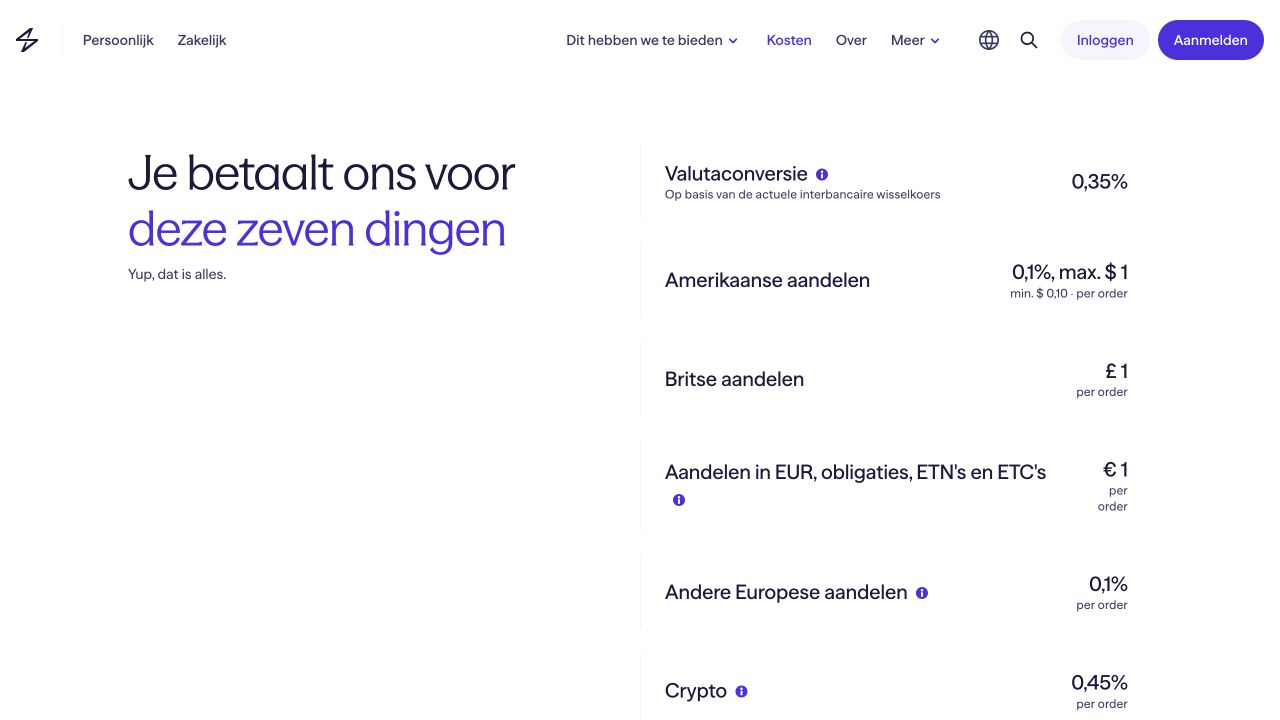
Lightyear lists the Netherlands in its service area and names Lightyear Europe AS. Its Dutch stocks page includes Dutch and international shares, and its fee page shows share dealing and conversion as separate items. A shareholder who can find the desired security in Lightyear's catalogue may value that direct presentation. The limitation is portability: its transfer help says outgoing transfers have position-value and whole-share conditions. Fractional positions cannot be transferred. This matters if the first purchase is deliberately fractional. Check the specific share, venue and currency before comparing it with a full-service exchange account. See the Lightyear review.
BUX: Dutch shares with order-type and tier limits
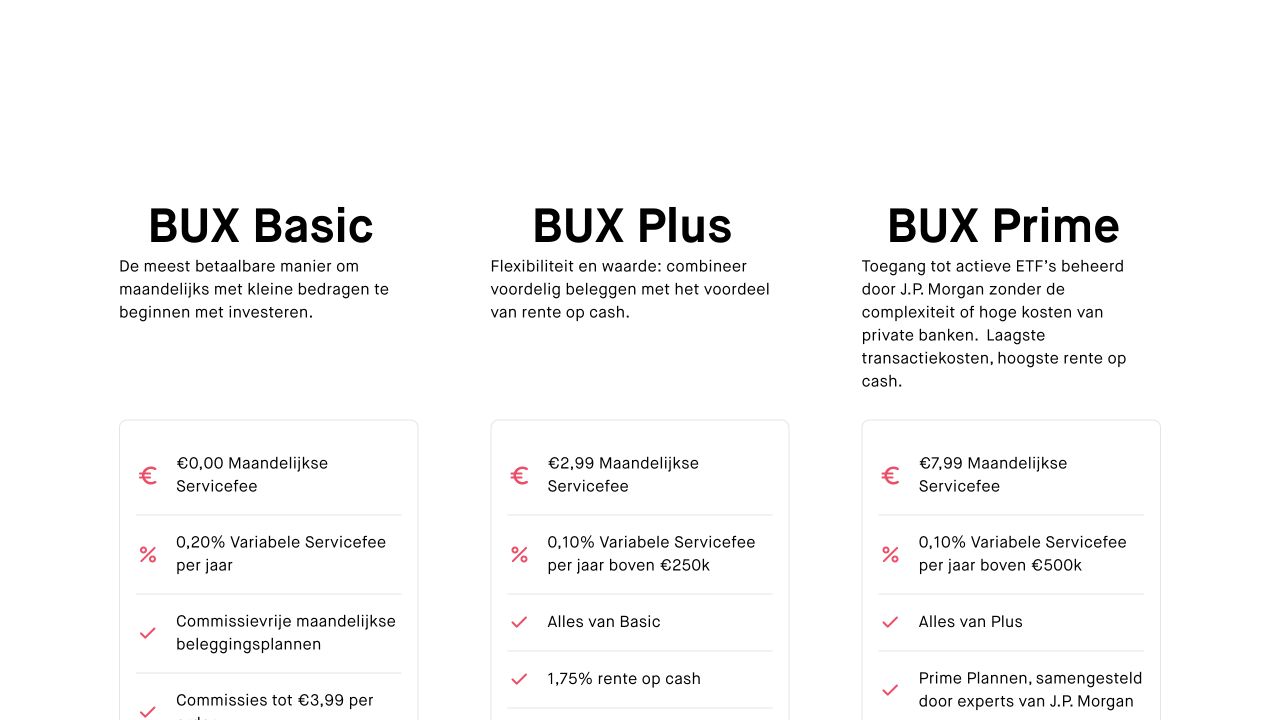
BUX B.V. identifies itself as the firm providing share and ETF investment services. Its Dutch service is relevant for supported local and US shares. The NL pricing page changes with Basic, Plus and Prime. The order help says some types are not yet available for every stock. BUX can suit someone whose chosen share and desired order type are supported in an app-led routine. It is less suitable if a precise venue, advanced order instruction or inexpensive frequent US currency conversion is essential. A buyer should model the relevant tier over a year rather than compare a single commission line with another broker's basic account.
The current Dutch pricing page also lists a 0.20% annual variable service fee on Basic, a €2.99 monthly service fee on Plus and a €7.99 monthly service fee on Prime, with additional tier conditions. Those service charges need to be included when modelling an annual holding and order pattern.
Trade Republic: share access with a distinct execution venue
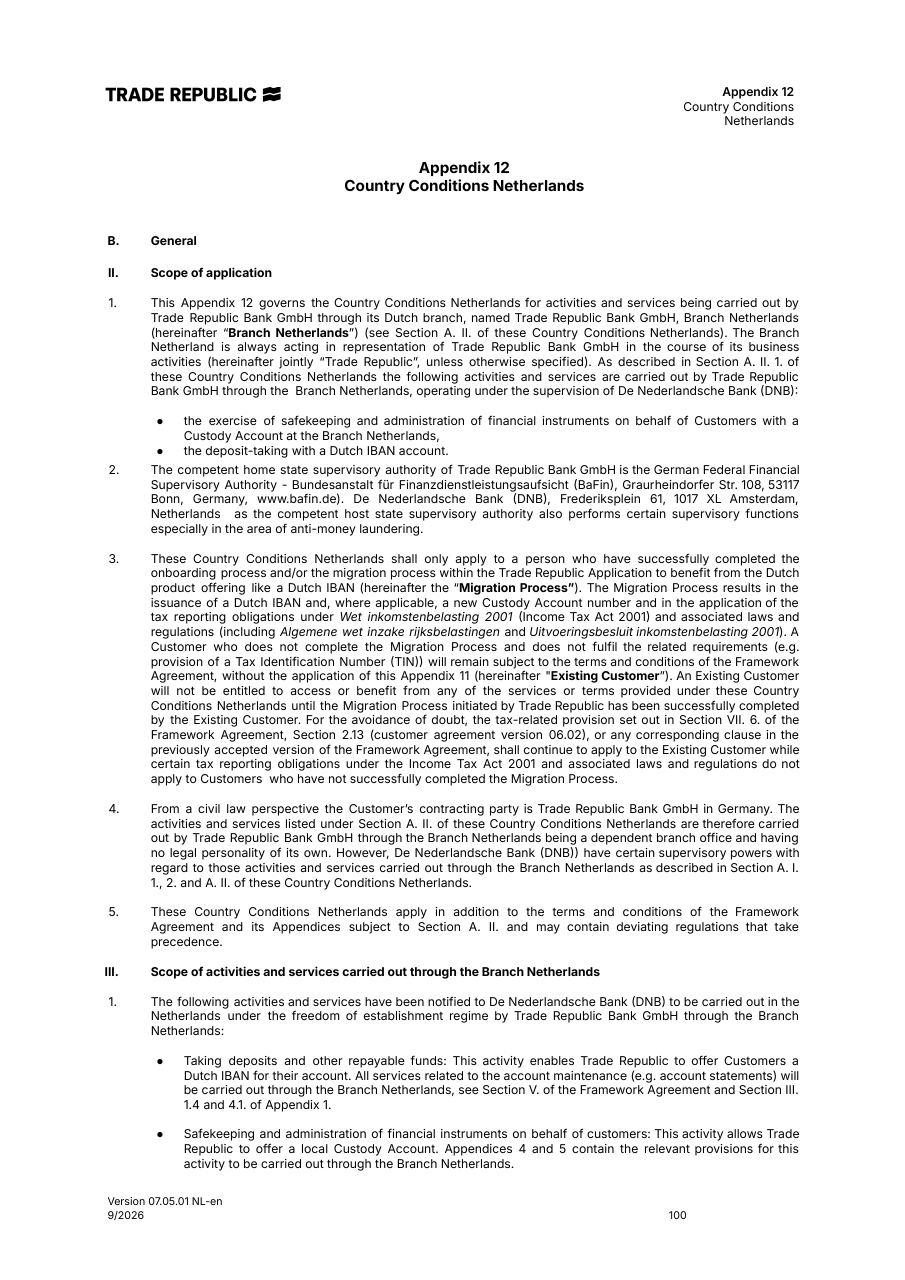
Trade Republic lists the Netherlands as an accepted country, and its Dutch prices discuss shares, one-off settlement and spreads. The Netherlands country conditions identify Trade Republic Bank GmbH and its branch role. This account can fit an investor who wants simple one-off or recurring purchases of securities it actually offers. The caveat for a Dutch-share comparison is venue: owning a share in a Dutch company does not prove the order is routed to Euronext Amsterdam. Compare the exact ISIN, venue, bid–ask quote and full order ticket. Its instrument help also discusses transfer as a possible option when trading availability changes.
Scalable Capital: supported EU shares, not every Amsterdam line
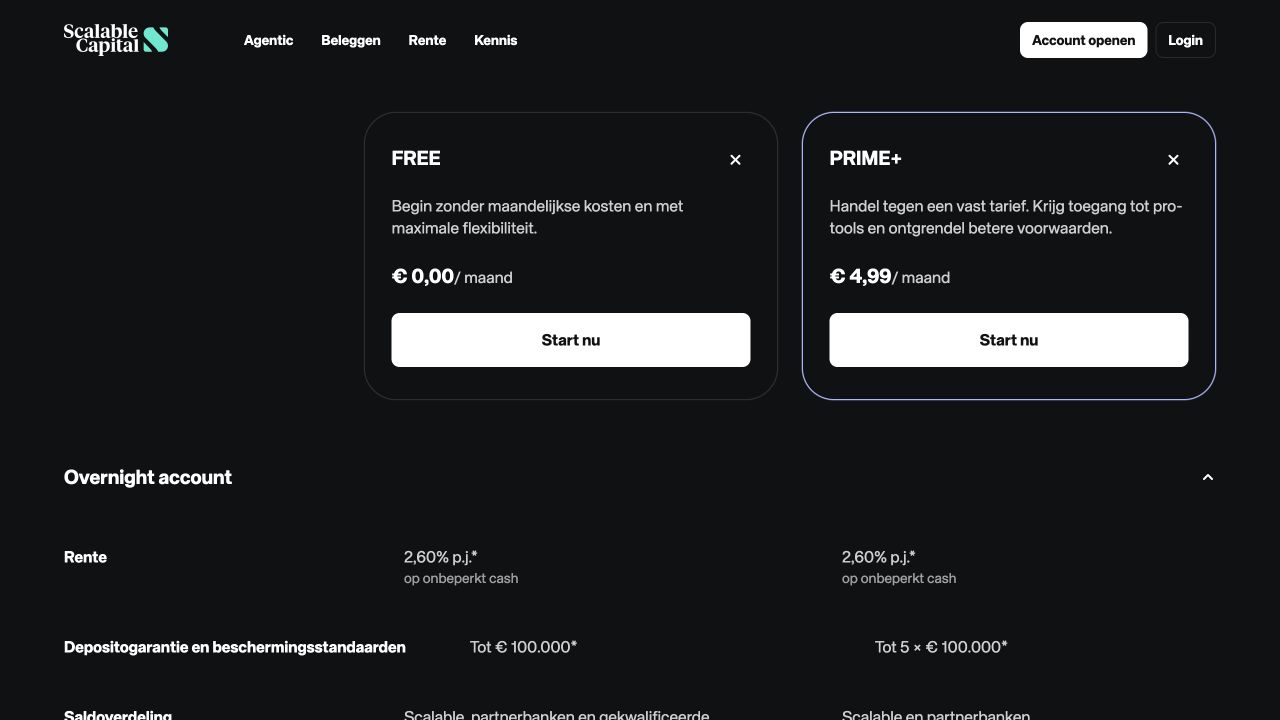
Scalable's Netherlands-facing share page offers stocks through its supported venues. The entity FAQ identifies Scalable Capital Bank GmbH, and its cost page distinguishes FREE from PRIME+ and different order-size treatment. It can suit a reader whose desired company is available on one of those venues and whose trading pattern fits the chosen tier. It is less clear for someone requiring the Euronext Amsterdam trading line specifically: the instrument FAQ says availability depends on the supported exchange and the individual security. Search the ISIN and venue rather than infer Amsterdam access from a Dutch-language page.
eToro: verify underlying ownership on every ticket
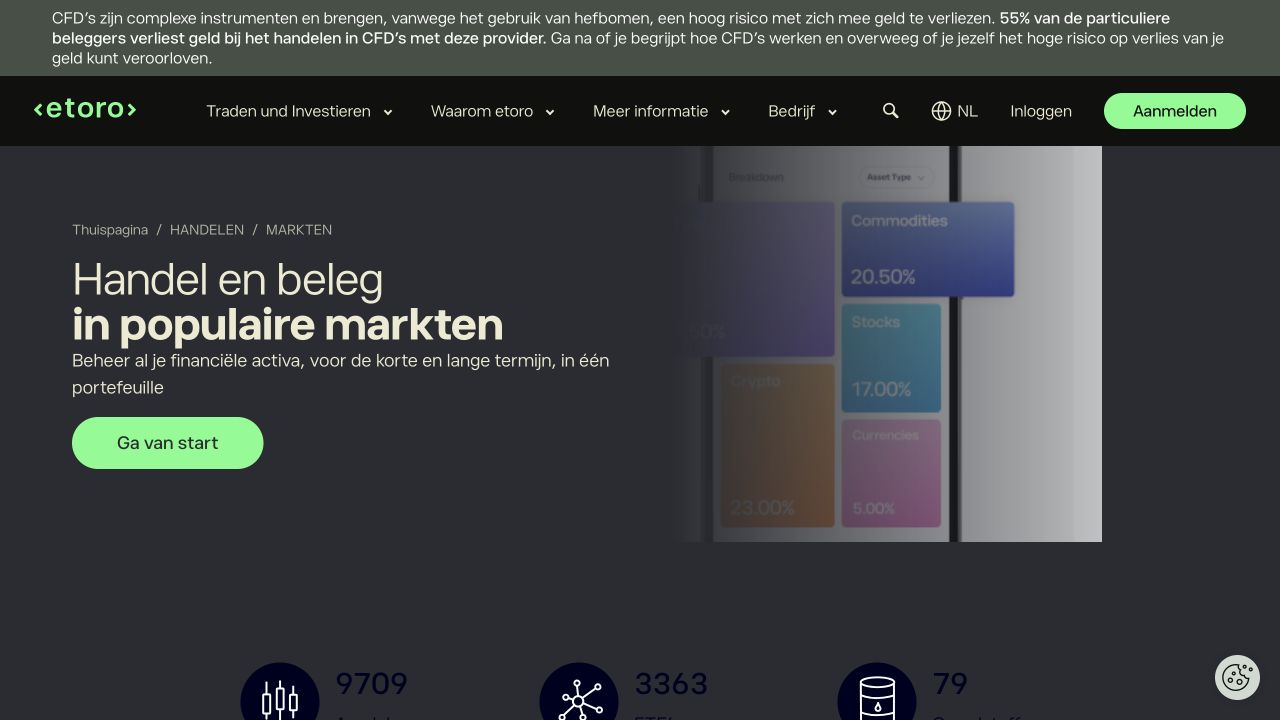
eToro's stock help explains that an eligible non-leveraged long order may acquire the underlying share, while a short or leveraged order is a CFD. The confirmation window identifies which. Its Dutch currency-account page identifies eToro (Europe) Ltd as the trade-execution entity for EUR funding. This can suit a shareholder who wants the provider's social features and confirms the exact product. It is a weaker fit for someone who wants a uniform, exchange-direct stock workflow or easy tariff comparison, because product type, currency account and commission vary. The Dutch cost page should be read for the intended exchange and account. Ask support about the in-kind transfer route for the actual holding. See our eToro review.
Amsterdam and US order worksheets
For a €1,000 Euronext Amsterdam share purchase in a euro account, record the ISIN, execution venue, the broker's order commission, handling or external charges, the bid–ask spread and any annual account fee. DEGIRO's Dutch tariff schedule displays €2 commission plus €1 handling for an Euronext Amsterdam share transaction. On those published standard terms, the explicit broker charge for one such order is €3. The actual execution price still incorporates the prevailing spread. DEGIRO says Euronext Amsterdam is exempt from its foreign-exchange connectivity charge. This is a worked example for one provider and venue, not a price for every Dutch security or account condition. For Saxo or Swissquote, consult the correct account-level schedule. For Scalable or Trade Republic, verify whether the trade uses Amsterdam at all.
For a €1,000-equivalent US share purchase funded in euros, add currency conversion to the share order. The same DEGIRO NL schedule shows €1 commission plus €1 handling for American exchanges and a 0.25% AutoFX markup embedded in the conversion price. If exactly €1,000 is converted under that percentage, the illustrative direct order-and-conversion components are €2 + €2.50 = €4.50, before the market spread, any applicable transaction tax or special product charge, and the possible annual US-exchange connectivity fee. Its tariff explanation describes connectivity as up to €2.50 per calendar year for a foreign exchange, subject to the portfolio-based rule, so that annual item should not be silently rolled into every order. A manual currency setting has different terms. Other brokers may allow a dollar balance, use a different FX calculation or add a tier fee. Compare the same share, amount and funding route, not two isolated commission numbers.
Ownership, dividends and transfers
Share ownership is normally held through custody arrangements rather than a paper certificate. Read the broker's terms for how positions are registered, who the custodian is, what happens to a fractional share and how a transfer is requested. The AFM's consumer explanation distinguishes custody arrangements and protections from ordinary changes in a share's market price. If a broker offers both real shares and CFDs, the rights and transferability of those products are different. Our broker-safety guide gives a procedure for the contractual entity and custody check.
Dividend processing can also change the comparison. A real share may pay a dividend, but the payment, currency, withholding tax and any broker handling are separate records. The Tax Administration explains Dutch dividend withholding. The investor's treatment of foreign withholding may differ. The broker should provide a dividend note showing gross payment and deductions. Our Dutch investing-tax guide covers the records rather than attempting a universal tax result.
Before opening a long-term account, ask if full shares can move out in kind, whether a fractional position must be sold, whether the same ISIN and venue are supported by the receiving broker, and which fees apply. Lightyear's NL transfer help gives explicit whole-share and position-value conditions. Trading 212's transfer explanation says support depends on account and entity. Saxo's incoming-transfer service does not prove that every outgoing transfer from another broker is free. If in-kind movement is unavailable, selling and rebuying can create spread, market-timing and currency costs. Do not treat a cash withdrawal as the same operation as moving a share.
Frequently asked questions
Can every provider here buy a real Euronext Amsterdam share?
No. Every provider has a documented real-share route, but the Amsterdam trading line is not established for every account. Some may offer the same Dutch company through another venue or a limited selection. Search the ISIN and inspect the final venue and product label before comparing prices.
Is a CFD on a Dutch stock the same as buying the stock?
No. A CFD is a contract whose value tracks the stock. It does not make the customer the holder of the underlying share. Our CFD guide explains the distinction. A platform offering CFDs on an Amsterdam company is not thereby a real-stock broker for this comparison.
Does a US stock cost only the listed commission?
Usually there is a currency path to consider when the investor starts with euros. FX markup, bid–ask spread, possible venue charges and account-level fees may be material. A dollar cash balance may change when conversion happens, but not eliminate the need to price it.
Can I always transfer my shares to another broker later?
No. Transfer rules depend on the provider, the receiving broker, the security, venue and whether the holding is fractional. Read the provider's current in-kind transfer terms before relying on portability. A sale-and-withdrawal is a different process.


 Interactive Brokers
 Saxo
 Swissquote Bank Europe
 Trading 212 Invest
 Lightyear
 eToro